
Purdey – Gardening with dogs in mind
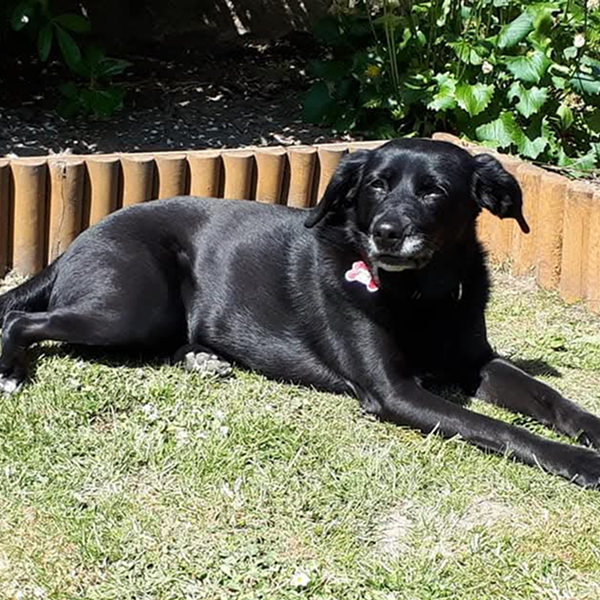
How to make a dog friendly garden
Purdey was our family dog who we adopted in February 2011 when we lived in Agia Galini in Crete.
She was instrumental in helping me to gain my first two clients when I set the business up in 2015. I became very aware of the importance of dog friendly gardens when we moved back to Bradford, West Yorkshire in 2014 so this is an area I can help my clients with. Sadly, at the grand old age of fifteen and a half years Purdey crossed the rainbow bridge on 7th May 2026. Our garden was designed around Purdey and like most dogs she had a favourite part of the garden she enjoyed relaxing in. Today we simply refer to it as ‘Purdey’s Corner’.
Any comments you read here are purely from my own experience of dog ownership, observations of other people’s dogs and knowledge gained over many years.
It would be very easy for me to make a long list of plants which are deemed not safe for dogs, and I will list a few of them. However, we were fortunate that Purdey did not tend to chew on any plants in our garden except for the occasional section of long grass. Indeed, most dogs will avoid poisonous plants altogether although it is wise to keep an eye on puppies and young dogs who may explore with their mouths.
Plants I would avoid are most bulbous plants for example, Alliums, Bluebells, Daffodils and Tulips. Also, other examples are, Common poppies, Delphinium, Foxgloves, Hellebores, Lilies, Mistletoe and Yew. There are a multitude of other examples but if you suspect your dog has eaten any poisonous plant, you should seek help from a vet immediately.
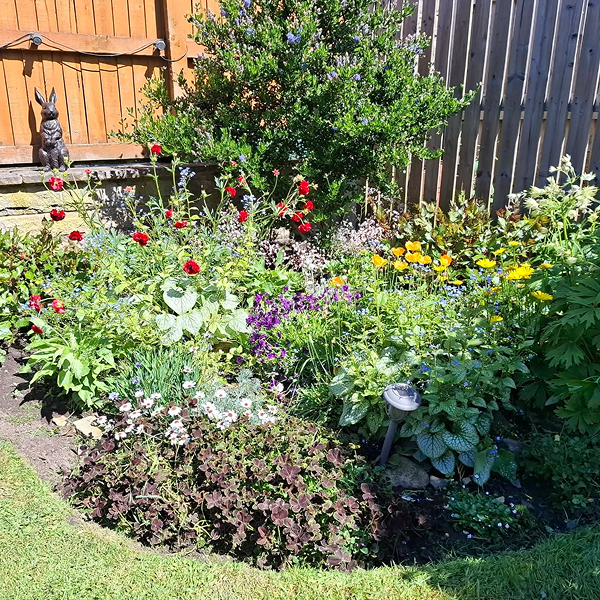
‘Purdey’s Corner’
Advice
Security is important and the first thing I did was to plug any gaps in our fencing to keep Purdey in and keep her safe. Remember to close any gates.
Lawns. Grass lawn areas are great for dogs to play in and exercise. Or in Purdey’s case steal socks and run around the garden while I tried in vain to retrieve them!
I would however avoid artificial lawns which can get too hot in the summer and cause damage to their paws. Artificial lawns can also trap odours from urine and require regular cleaning. Personally, I think they are exceptionally bad for the environment not just for the greenhouse gases that are created but also for our wildlife.
Shade. As much as dogs enjoy being out in the garden on a hot sunny day, they also enjoy relaxing in shaded areas. Our garden is north facing so it was quite easy to create shade, but you can always plant trees and hedging. We always made drinking water available and some dogs love a small paddling pool on hot days.
Chemicals. I would avoid the use of any chemicals in the garden. I never used them while we had Purdey whether it be slug pellets, weed killers or any other treatments.
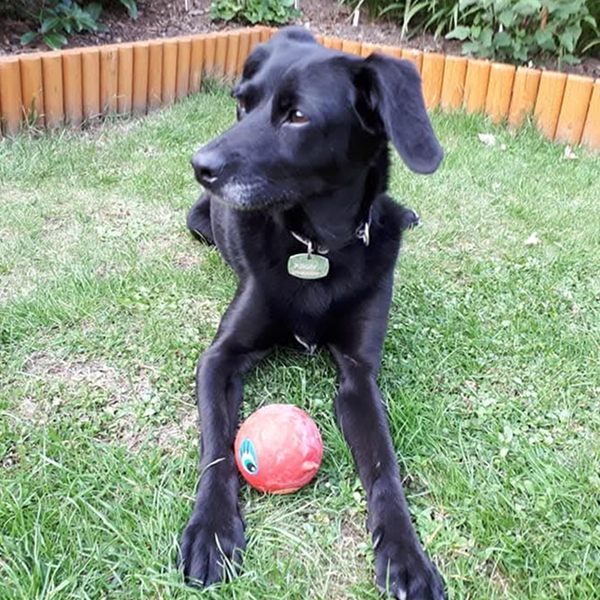
Purdey
Gravel. Most dogs do not like gravel paths. We have a gravel section in our garden which we use for potted plants like Hostas to help deter slugs from attacking them. Gravel can be quite sharp for dogs’ paws so please ensure there is an accessible pathway made of other materials.
Tough plants. One thing I’ve noticed over the years is that most dogs will take the shortest route possible to get to their favourite spot in the garden and not bother too much if your delicate plants are in the way. You may wish to consider planting Astilbe, Hardy Geraniums and Lavender like I have which are quite robust plants.
Sheds & sharp objects. If you have a shed like me, you will most likely have all sorts of items in there which will be a danger to animals. Quite simply please remember to keep the door shut when not in use. Check your garden for any sharp objects which may be a hazard.
Ultimately, we all want to enjoy our gardens and a few simple steps can ensure that they are safe for our four legged friends too.